Zero Trust Security in Conversational AI Platforms: A Plain-English Guide
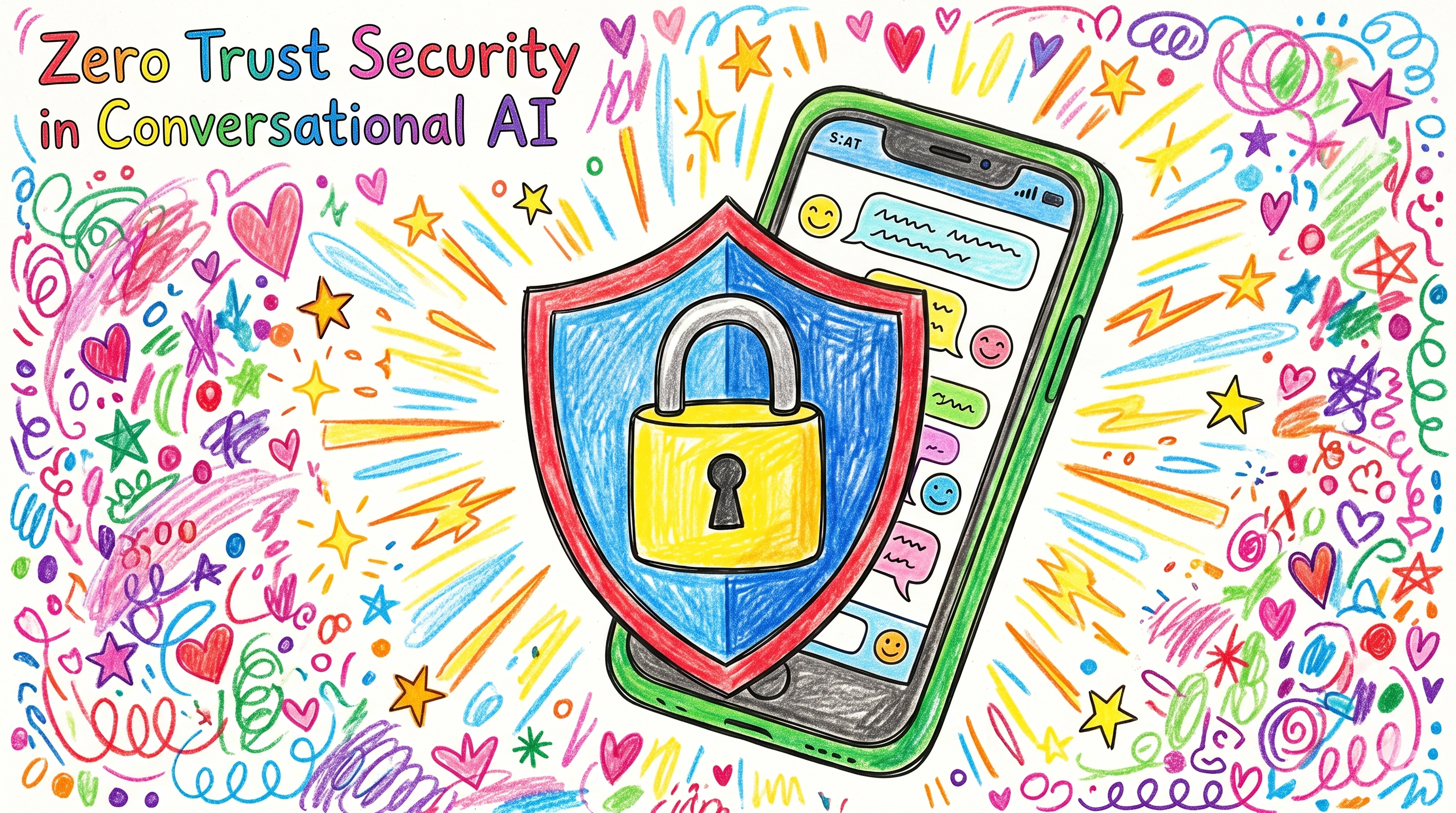
In the era of AI-driven customer service, security is paramount. Zero Trust architecture ensures that no user, device, or service is trusted by default — every access request is verified.
Why Conversational AI Is a Prime Target
A chatbot is a hub. It connects to Meta's Graph API, your CRM, your payment provider, and your internal tools. Each connection is a door. Old models trust internal traffic. Attackers know this, which is why stolen API keys and compromised employee accounts caused most chatbot breaches in 2025.
Zero Trust treats every connection, even from inside your own network, as untrusted until verified.
The 5 Core Controls, Explained Simply
1. Identity Verification for Every Action
No long-lived passwords. The platform issues short-lived JWT tokens that expire in minutes. Admin actions require MFA. If a token is stolen, it becomes useless quickly.
2. Least Privilege Access
Using Role-Based Access Control, a support agent can reply to chats but cannot download the full database. A marketer can edit bot flows but cannot see credit card tokens. Access is granted just-in-time and revoked automatically.
3. Encryption Everywhere
- In transit: TLS 1.3 encrypts messages between user and server.
- At rest: AES-256 encrypts stored conversations.
Secrets are never in code. They live in a dedicated vault with strict access policies.
4. Micro-segmentation
Each business runs in its own isolated container or tenant. A vulnerability in one bot cannot spread to another. This also stops AI models from leaking data between customers, a key risk with large language models.
5. Continuous Logging and Monitoring
Every login, permission change, and data export is written to an immutable audit trail. A SIEM watches for anomalies, like a bot suddenly accessing 50,000 records at 3am, and can auto-revoke access.
Real-World Impact
For a retailer using Instagram DMs, Zero Trust means a customer's address is encrypted, isolated to that store's tenant, and only visible to an authenticated agent on an approved device. Even platform engineers cannot access it without a logged, temporary break-glass approval.
Business Benefits
- Lower risk and cost: IBM's 2025 report found Zero Trust reduced average breach costs by 42%.
- Compliance ready: helps meet GDPR, Indonesia PDP Law, and SOC 2 requirements.
- Customer confidence: security becomes a selling point, not a hidden cost.
How to Vet a Chatbot Vendor
Ask for clear answers to:
- Is MFA mandatory for all admins?
- Where are encryption keys stored?
- Can I define granular roles?
- Do you provide exportable audit logs?
- Is tenant data truly isolated?
Conclusion
Implementing Zero Trust in your conversational AI platform is not optional, it is essential. It shifts security from hoping no one gets in to ensuring damage is impossible even if they do. Platforms like StroomChat are built with Zero Trust principles from the ground up, ensuring your customer data is protected at every layer, for every message.